 Skip to content
The Complete Guide to Custom Decoration: Screen Printing vs. Embroidery vs. Heat-Press (2026)
How custom apparel decoration actually works, what each method costs you in setup and per-piece, which method fits which garment, and the artwork you need to get a result you’ll be proud to put your logo on. Written by a team that screen prints, embroiders, and heat-presses in its own building.
Last updated: October 12, 2026 · By Prodigy Promos, Lindon, Utah
What is custom decoration?
Custom decoration is the process of applying your logo or design to apparel and products. The three workhorse methods are screen printing (ink pushed through a mesh screen), embroidery (thread stitched into the fabric), and heat-press (a printed transfer applied with heat and pressure). Each wins on a different combination of garment, quantity, color, and budget.
The decoration method is the decision that quietly determines whether your merch looks like a giveaway or like something people keep. The same logo on the same shirt can read cheap or premium depending on how it’s applied. The method also sets your cost curve, your minimum order, and how long the job takes. Choosing well is mostly about matching the method to the job: the garment, the artwork, the quantity, and what the piece is for. The rest of this guide is how to make that match.
The three methods at a glance
Screen printing is cheapest per piece at volume and the most durable for flat fabric. It’s the workhorse for t-shirts and event runs. Embroidery is the premium, textured look for polos, jackets, caps, and bags. Heat-press handles full color, photographic detail, and individual names and numbers, with little or no setup, which makes it ideal for small runs and on-demand orders.
| Screen printing | Embroidery | Heat-press / transfer | |
|---|---|---|---|
| How it works | Ink pushed through a mesh screen, one screen per color | Thread stitched into the garment by machine | A printed transfer applied with heat and pressure |
| Best for | T-shirts, hoodies, high-volume event runs | Polos, jackets, caps, bags, and anything that should read premium | Full-color art, names & numbers, small or on-demand runs |
| Look & feel | Smooth, vibrant ink that sits on the fabric | Raised, textured stitching that reads quality at arm’s length | Full-color, photographic detail possible |
| Color handling | Spot colors; cost rises with each ink color | Thread colors; cost driven by stitch count, not color count | Unlimited color (full-color is free) |
| Economics | Per-color setup that amortizes away at volume, cheapest per piece in quantity | One-time digitizing setup, then priced by stitch count | Little or no setup; higher per-piece that stays flat at volume |
| Personalization | No, every piece is identical | Possible, but each name adds stitching | Yes, every piece can be different |
Most real programs mix methods rather than pick one: screen-printed event tees, embroidered polos for the sales team, heat-pressed names on the jerseys. A good decorator puts the right method on each garment. When we quote, we recommend per item, and we’ll tell you when the cheaper method is genuinely the right call.
Screen printing: the volume workhorse
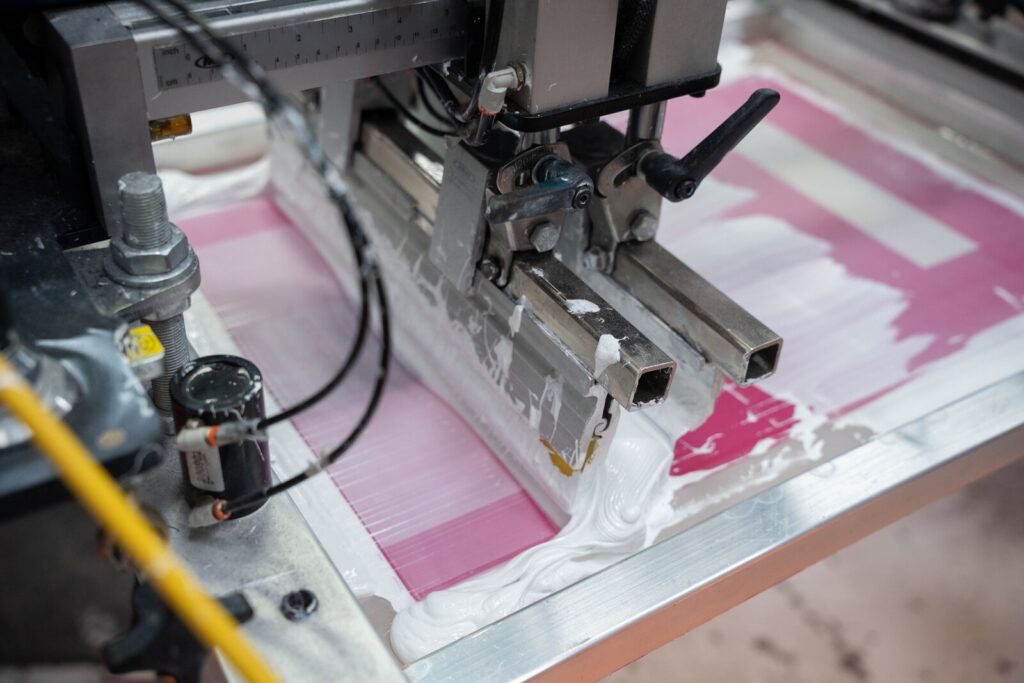
Screen printing pushes ink through a fine mesh screen, one per color, onto the garment. Because each color needs its own screen and setup, the up-front cost is fixed but the per-piece cost drops fast as quantity climbs. That makes it the most economical method for larger runs of t-shirts, hoodies, and event apparel, with a finish that’s vibrant and built to last.
The economics are the whole story with screen printing. Each ink color in your design needs its own screen, and burning those screens is a setup cost on every run. Spread that cost across 25 shirts and it stings; spread it across 500 and it disappears into the noise. So screen printing rewards two things: quantity, and restraint with colors. A clean two-color logo on 300 tees is the method at its best. A six-color photographic gradient on a dozen shirts is the method fighting you. That job wants heat-press instead.
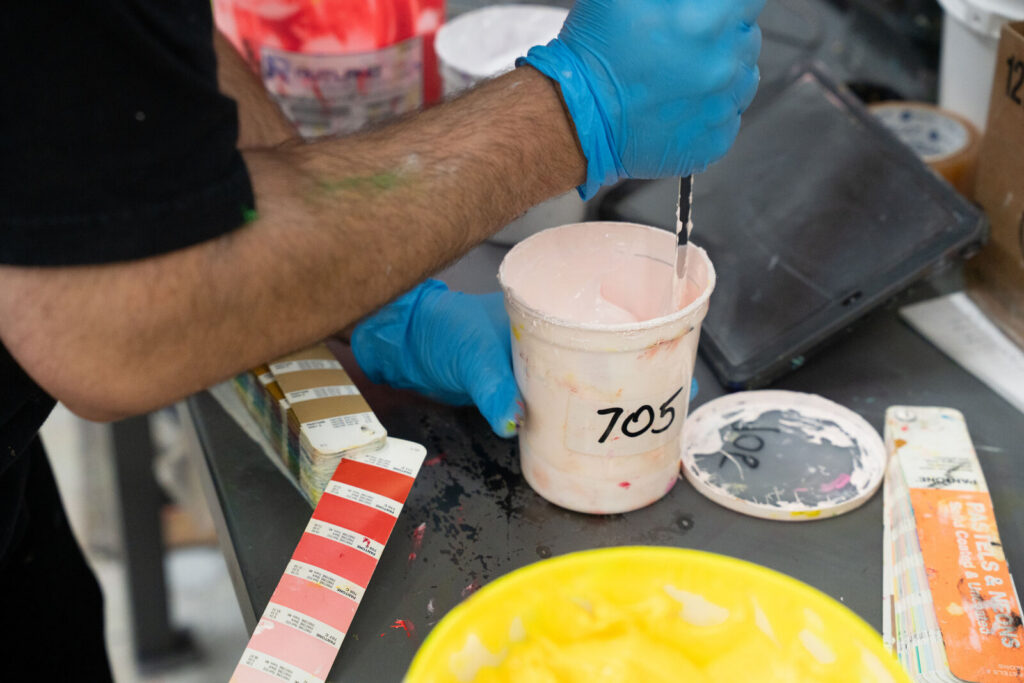
What screen printing gives you in return is durability and color fidelity. The ink is laid down thick and cured into the fabric, so a well-printed shirt holds its design through years of washing. And because we mix to the Pantone Matching System, your brand color is a numbered formula: the same on this run and the next.
Embroidery: the premium, durable look
Embroidery stitches thread directly into the garment, so the logo is part of the fabric rather than printed on top. It reads premium and dimensional, survives the life of the garment, and is the default for polos, jackets, caps, and bags. Cost is driven by stitch count (how dense and large the design is), not by the number of colors.
Embroidery starts with digitizing: your logo is converted once into a stitch file that tells the machine where every needle goes. That’s a one-time setup per design, and after it’s done the same file produces an identical result on every reorder, for years. It’s why embroidery is the right call for anything you’ll order again and again: uniforms, branded outerwear, the company cap.
Two practical notes. First, embroidery is priced by stitch count, so a dense, large, or highly detailed logo costs more to stitch than a simple mark, and very fine detail or small text can get lost in thread. We’ll flag it before production if your art needs simplifying for the size. Second, embroidery doesn’t suit every fabric: lightweight performance tees can pucker, which is exactly where a good decorator steers you to print instead. Matching method to garment is the job.

Heat-press: full color, personalization, and small runs
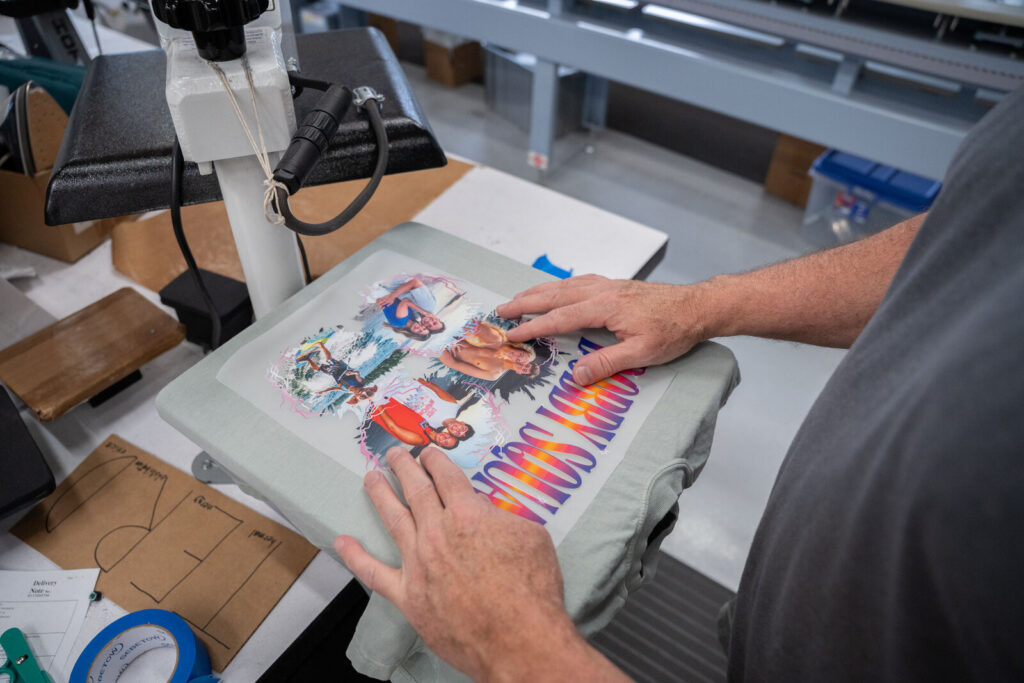
Heat-press applies a printed transfer to the garment with heat and pressure. Because there are no screens to burn, setup is fast and cheap, full color costs no more than one color, and every single piece can be different. That makes heat-press a strong fit for photographic art, individual names and numbers, lower-volume runs, and on-demand personalization.
Where screen printing punishes small quantities and many colors, heat-press shrugs both off. A full-color design on a single jersey, with a different player name on each one, is trivial: no screens, no per-color math, decorate when ordered.
The trade-off is the per-piece cost, which stays relatively flat instead of dropping at volume, so for a large run of a simple one- or two-color design, screen printing usually wins on price. Heat-press earns its place on color, detail, and individuality, not on bulk economy.
Where do DTF, DTG, and the Digital Squeegee fit?
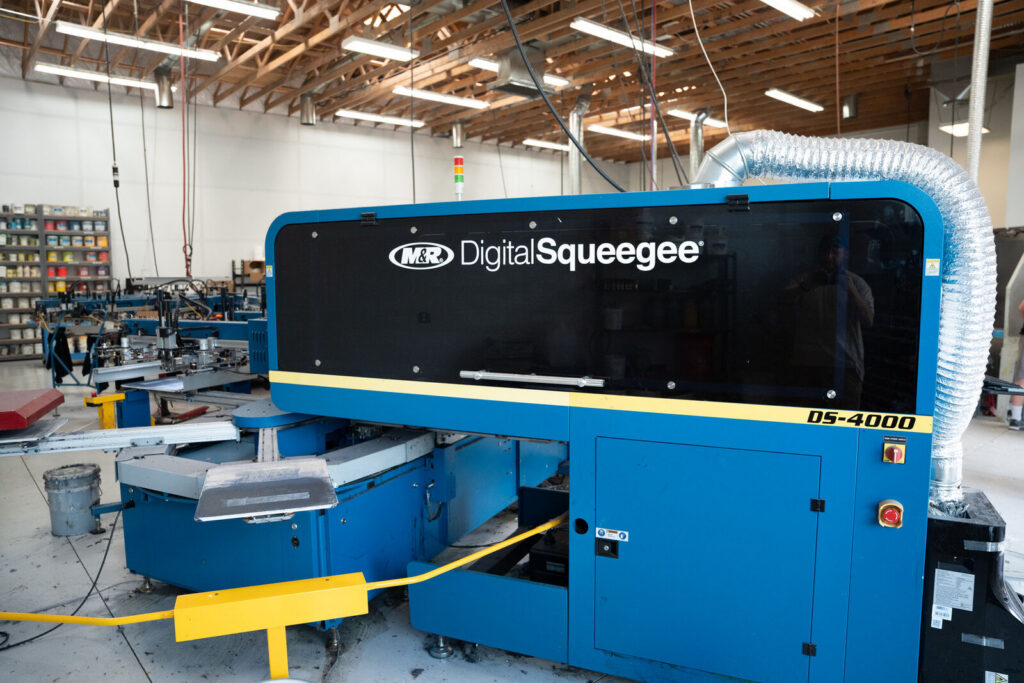
DTF and the Digital Squeegee are newer takes on two methods above. DTF is the transfer most heat-press work uses. The Digital Squeegee prints full-color digital art over a screen-printed underbase. DTG is separate, spraying ink into cotton fibers. We press DTF and run a Digital Squeegee in-house, source the transfers from trusted vendors, and place DTG with trusted partners.
The acronyms describe how the ink gets there. DTF (direct-to-film) prints your design onto a film, coats it with a powdered adhesive, and heat-presses it onto the garment, so it bonds to nearly anything a press can reach: cotton, polyester, blends, totes, caps. DTG (direct-to-garment) sprays water-based ink into the fibers themselves, which needs natural fibers to soak into and leaves almost no feel on the finished shirt. The Digital Squeegee starts out as a screen print, laying down a white underbase (plus a blocker screen on polyester), then prints the full-color image digitally on top. That foundation is how it holds screen-print durability and feel at photographic detail.
Fabric and quantity decide between them. A mixed order (cotton tees, poly quarter-zips, a dozen caps) comes out cleanest on DTF, because one method covers the whole lineup. Larger runs of 100% polyester are where the Digital Squeegee earns its setup: polyester dye turns gaseous under press heat and bleeds into a transfer’s white ink layer, and the blocker screen stops that at the source. Cotton merch in lower volumes, where softness is the whole point, is DTG’s job. Our post on DTF vs. DTG vs. Digital Squeegee compares all three on feel, durability, fabric, and price.
Which method for which garment?
As a rule of thumb: t-shirts and hoodies in volume go to screen printing; polos, jackets, caps, and bags go to embroidery; full-color art, names and numbers, and small or on-demand runs go to heat-press. Most programs use more than one method, and the right answer depends as much on quantity and artwork as on the garment itself.
| Garment | Usual best method | Why |
|---|---|---|
| T-shirts (volume) | Screen printing | Cheapest per piece at quantity, durable on flat cotton |
| Hoodies & sweatshirts | Screen printing or embroidery | Print for bold front art; embroider a left-chest logo for a premium feel |
| Polos | Embroidery | The expected, premium look; survives the life of the shirt |
| Jackets & outerwear | Embroidery | Texture reads quality on heavier fabric; durable outdoors |
| Caps & hats | Embroidery | Curved, structured surface suits stitching |
| Bags & totes | Embroidery or screen printing | Embroider for premium, print for large bold graphics |
| Jerseys with names/numbers | Heat-press | Per-person personalization, decorated on demand |
| Full-color / photographic art | Heat-press | Unlimited color at no color premium |
Treat the table as a starting point, not a law. Quantity can override it. A one-color logo on 1,000 polos might print more economically than it embroiders. So can artwork. That’s the conversation we have when we quote: the right method for your garment, art, and quantity, recommended item by item.
What drives the cost of decoration?
Decoration cost comes down to setup plus per-piece. Screen printing and embroidery carry setup costs (screens per color; digitizing) that get cheaper per shirt as quantity rises. Heat-press has little setup but a flatter per-piece cost. The big variables are method, quantity, number of ink colors or stitch count, the garment itself, and how many print locations you want.
The levers that actually move your quote:
- Quantity. Setup-heavy methods (screen printing, embroidery) get dramatically cheaper per piece as the run grows. This is the single biggest lever.
- Colors or stitch count. Each screen-print color adds a screen and setup; denser embroidery adds stitches. Heat-press is the exception: full color costs no more than one.
- The garment. Decoration rides on top of blank cost. A mid-tier garment people actually wear usually beats a cheap one that gets thrown away. The most expensive shirt is the one nobody wears twice.
- Print locations. A front and a back, or a chest and a sleeve, are two decorations, not one.
- Art prep. Clean vector art runs straight through; messy files need prep first (see below).
We don’t publish flat decoration price points, because a real number depends on every lever above. Tell us what you’re making and we’ll scope it with real numbers. Our promotional-products pricing guide walks through the drivers in more detail.
Artwork: what to send for the cleanest result
Send vector artwork (AI, EPS, or a true vector PDF) for the cleanest result at any size, because vector scales without getting blurry. If all you have is a logo screenshot or a low-resolution file, send it anyway: art prep is part of the job, and you’ll approve an exact mockup before anything is produced.
Two things make artwork production-ready. The first is format: vector files describe shapes mathematically, so they stay crisp whether your logo lands on a hat or a banner. Raster files (JPG, PNG) are fixed to a pixel grid and soften when scaled up. The second is color: we work in the Pantone Matching System, so your brand color becomes a numbered ink formula that reproduces identically on every run and reorder, rather than drifting between vendors. Our Art File FAQ (opens in a new tab) answers the common questions about file types and what to send.
If your files aren’t ideal, it’s not a problem. Preparing and, where needed, recreating artwork is something we do as part of the job. And if you’re starting from nothing (an idea, a theme, or just a brand to build around), our in-house design team can create the artwork from scratch. You’ll see and approve a mockup of exactly what will be decorated before a single piece runs.
Why in-house decoration matters
Most promotional-products companies broker decoration out to contract shops. Prodigy runs its own screen printing, embroidery, and heat-press production, with trusted partners for methods we don’t run in-house or extra capacity. That means tighter quality control, faster turnaround, and one accountable team from artwork to delivery. When something needs fixing, the press operator and your account manager share a roof.
Brokered decoration adds a layer of distance to everything that matters: a contract shop sets the schedule and owns the quality checks. In-house production collapses that distance. It also keeps the advice candid. A team that runs the presses will tell you when embroidery beats print for your jacket, when a budget tee will fight your art, and when the cheaper method is genuinely the right call, because they’re the ones who have to make it look good.
How long does decoration take?
Production typically runs about 1 to 25 days depending on the method, quantity, and whether the blank product is in stock or being sourced. Heat-press and small runs are fastest; large screen-print and embroidery orders, or jobs that need product ordered in first, take longer. We confirm a firm timeline with your quote, before you commit.
The real variable is rarely the decoration itself. It’s everything around it: approving artwork, sourcing the right blank in the right colors and sizes, and the size of the run. Get artwork approved quickly and choose in-stock product, and the timeline tightens. If you’re working back from a hard event date, tell us the date first; we’ll build the schedule around it and flag immediately if it’s tight rather than discovering it the week before.
Frequently asked questions
What’s the difference between screen printing and embroidery?
Screen printing pushes ink through a mesh screen onto the fabric: vibrant, flat, and cheapest per piece at volume, ideal for t-shirts. Embroidery stitches thread into the garment for a raised, premium, highly durable look, ideal for polos, jackets, and caps. Print is about color and quantity; embroidery is about feel and longevity.
Which decoration method is cheapest?
It depends on quantity. For larger runs of a simple design, screen printing is usually cheapest per piece because its setup cost spreads across many shirts. For small runs or full-color art, heat-press is more economical because it has almost no setup. There’s no single cheapest method, only the cheapest method for your specific job.
Can you print a full-color or photographic design?
Yes. Heat-press reproduces full-color and photographic art cleanly with no added setup, which makes it a natural fit for fine detail and smaller runs. Screen printing handles full color too, through full-color digital screen prints and simulated-process printing, which can be the better choice at volume or on certain materials. The right method depends on the artwork and what it’s going on, so we match it to the job.
Is there a minimum order?
It depends on the method. Screen printing and embroidery carry setup costs, so they make the most sense above a certain quantity; heat-press has almost no setup, so small and lower-volume runs are practical. Tell us what you’re making and we’ll give you the real minimum for that job, with no guessing.
What artwork file do you need?
Vector artwork (AI, EPS, or a true vector PDF) gives the cleanest result at any size. If you only have a screenshot or a low-resolution image, send it anyway; preparing and recreating artwork is part of the job, and you’ll approve an exact mockup before anything is produced.
Can you match our exact brand colors?
Yes. We work in the Pantone Matching System, so your brand color is a numbered ink formula rather than an approximation. The same PMS number produces the same color on every run, every reorder, and every product that can hold it.
Can you personalize items with individual names or numbers?
Yes. Heat-press is one easy way to add names, numbers, and per-person personalization, since every piece can be different with no added setup.
Tell us what you’re making.
Send the garment, the artwork, and the quantity, and we’ll recommend the right method per item, with real numbers and a firm timeline. Decorated in our own Lindon, Utah building, or through trusted partners when a job calls for it.
or call 801-785-5646
Decorating gear for a team, on repeat? Read the company webstore guide →